MEDICAL GAS INSTALLATION SYSTEM BY OUTLET POINT E-CATALOG - LKPP
MEDICAL GAS INSTALLATION SYSTEM PER OUTLET POINT E-CATALOG - LKPP A few months ago, specifically throughout July 2021, saw the highest number of deaths during the Covid-19 pandemic in Indonesia. The number of Covid-19 deaths during the period of July 1–31 reached 32,061 cases. This figure is four times higher than in June 2021, which recorded a total of 7,913 deaths. At that time, all hospitals in Indonesia were at full capacity, with the Bed Occupancy Rate (BOR) reaching 100%. Additionally, there was a shortage of oxygen cylinders and a scarcity of medical oxygen. The e-catalog of the Medical Gas Installation System per outlet point has become the most critical tool and primary necessity for treating COVID-19 patients.
To address the above issues and anticipate potential future surges, the construction and development of COVID-19 Emergency Hospitals (RSDC) in several regions across Indonesia are required. In cases like this, it is crucial to take swift and appropriate action to calculate and determine the types and quantities of medical gas PER OUTLET POINT required by a COVID-19 Emergency Hospital. This can only be carried out by certified companies, and the medical gas equipment used must have a Distribution Permit from the Ministry of Health of the Republic of Indonesia.
Medical gas and medical vacuum installation systems must be installed by technicians who hold a certificate from the Indonesian Medical Gas Installation Certification Body.
In accordance with the Regulation of the Minister of Health of the Republic of Indonesia / Ministry of Health Regulation No. 4 of 2016 on the USE OF MEDICAL GAS AND MEDICAL VACUUM IN HEALTHCARE FACILITIES, one of the articles of which states:
A. The use of medical gas and medical vacuum in healthcare facilities may be carried out through:
A.1. Medical Gas and Medical Vacuum Installation Systems
A.2. Medical Gas Cylinders.
A.3. Oxygen Concentrators
A.4. Medical Vacuum Equipment
B. The use of medical gas and medical vacuum in healthcare facilities within operating rooms, intensive care units, and emergency departments must be carried out through distribution via the Medical Gas and Medical Vacuum Installation System
The Medical Gas and Medical Vacuum Installation comprises a Medical Gas and Medical Vacuum Central Unit, piping systems, shut-off valves/zone valves, and medical gas alarms extending to the medical outlet and medical inlet points. The Medical Gas and Vacuum Central Unit is a set of equipment that includes a manifold, a medical compressed air system, an instrument compressed air system, a medical vacuum system, and an anesthetic gas waste disposal system (BSGA).
Medical compressed air systems (Medical Compressors) and/or compressed air tools (Tool Air / 7 Bar Air) are a set of equipment consisting of: an oil-free compressor, an air dryer, a filter, a tank, a pressure regulator, and a control panel used to power medical devices and medical respiratory equipment. Medical compressed air and tool compressed air are distinct systems; therefore, the copper piping network and outlet points must be kept separate.
Currently, the DIRECTORATE GENERAL OF PHARMACY AND MEDICAL DEVICES, through the Directorate of Medical Device and Household Health Supplies Assessment of the Republic of Indonesia—which is tasked with formulating and implementing policies, establishing norms, standards, procedures, and criteria, providing technical guidance and supervision, conducting evaluations, and reporting in the field of medical device and household health supplies assessment, has stipulated that all Central Medical Gas and Medical Vacuum Equipment used by Healthcare Facilities must possess a PRODUCT MARKETING AUTHORIZATION officially registered with the Ministry of Health of the Republic of Indonesia.
All Medical Gas Centralization and Medical Vacuum Equipment required to have a Product Distribution License consists of:
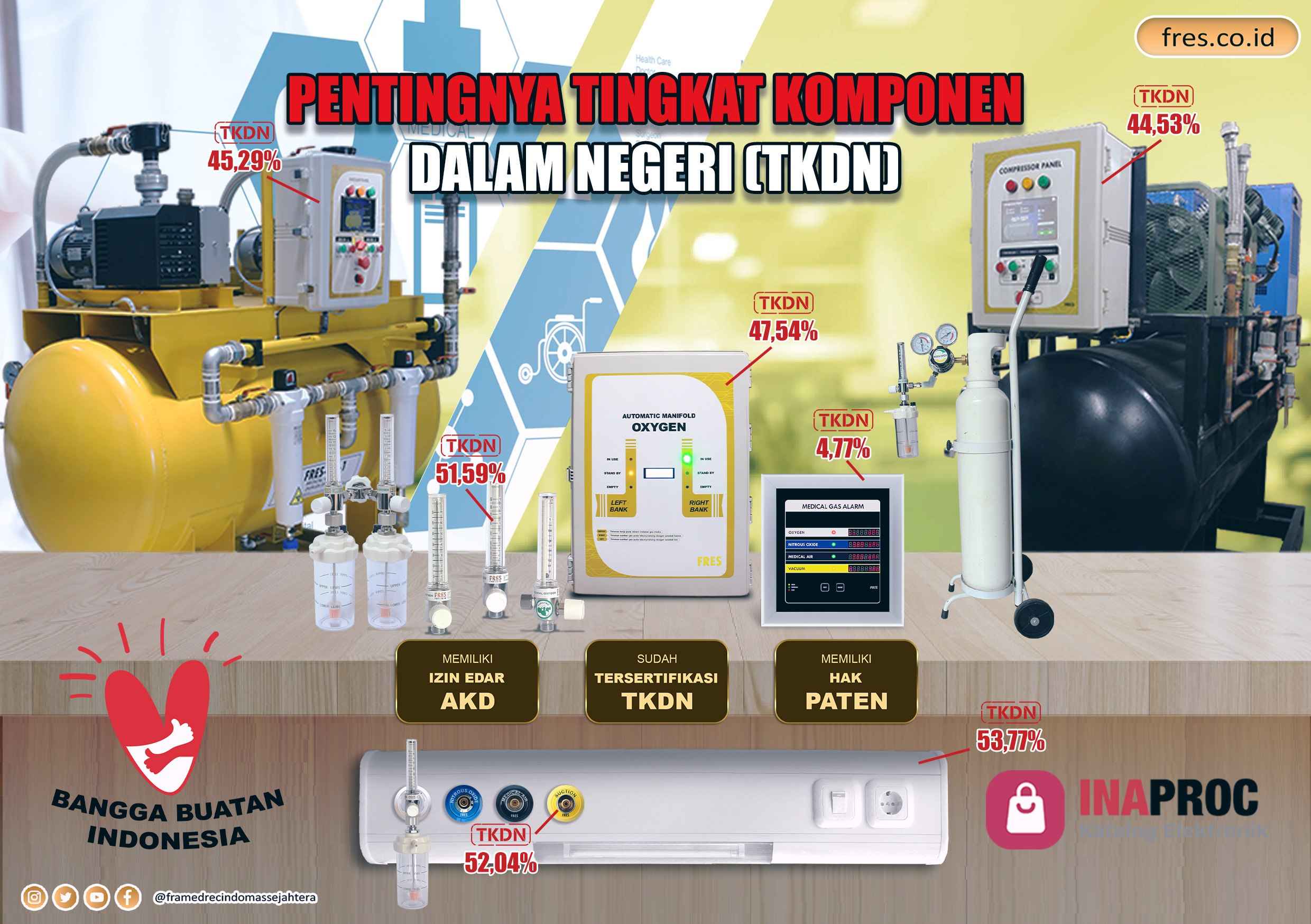
1. Automatic Manifold for Oxygen (O₂) / Nitrous Oxide (N₂O) / Nitrogen (N₂) and Carbon Dioxide (CO₂)
The Medical Gas Central Automatic Manifold is a unit designed to automatically operate central medical gas systems in medical gas installations, such as: Oxygen (O₂), Nitrous Oxide (N₂O), Nitrogen (N₂), and Carbon Dioxide (CO₂). Central medical gas systems are used for medical services in healthcare facilities.
The Fully Digital Automatic Manifold system is manufactured to high standards and quality, functioning automatically to transfer gas from empty cylinders—such as Oxygen, Nitrous Oxide, Carbon Dioxide, Nitrogen, and others (empty) to full (standby) cylinders to ensure a continuous supply of medical gas without the need for manual replacement by specialized personnel.
2. Medical Compressor System (Medical Compressed Air)
Consisting of 2 oil-free compressor units, 2 dryers, a series of filters, a control panel, and tanks, where all components must be integrated into a system in accordance with applicable medical standards, The Medical Compressed Air System produced by PT Framed Recindomas Sejahtera meets the specifications for medical compressed air as stipulated by the Indonesian Ministry of Health and has undergone rigorous quality control and testing.
3. Medical Vacuum System (Medical Suction)
Consisting of 2 units of Lubricated Vacuum Pumps, 2 units of Bacterial Filters, a control panel, and a tank, where all components must be assembled into a system in accordance with applicable medical standards, The FRES Medical Vacuum Central (Medical Vacuum/Suction Air) produced by PT Framed Recindomas Sejahtera comprises a series of vacuum equipment specially manufactured for medical needs in accordance with the regulations of the Minister of Health of the Republic of Indonesia and has undergone strict quality control and testing processes.
4. Medical Gas Alarm
The Digital Medical Gas Alarm is a unit that functions as an information device indicating the volume of medical gas in a specific area of the medical gas installation. It is typically placed at the Nurse Station for easier monitoring
This Medical Gas Supply Monitoring Alarm Panel is resistant to 220V high-current short circuits and can detect and indicate both low (low/empty) and high (excessive/above standard) pressure levels. It is available for 1, 2, 3, 4, 5, or 6 gas lines.
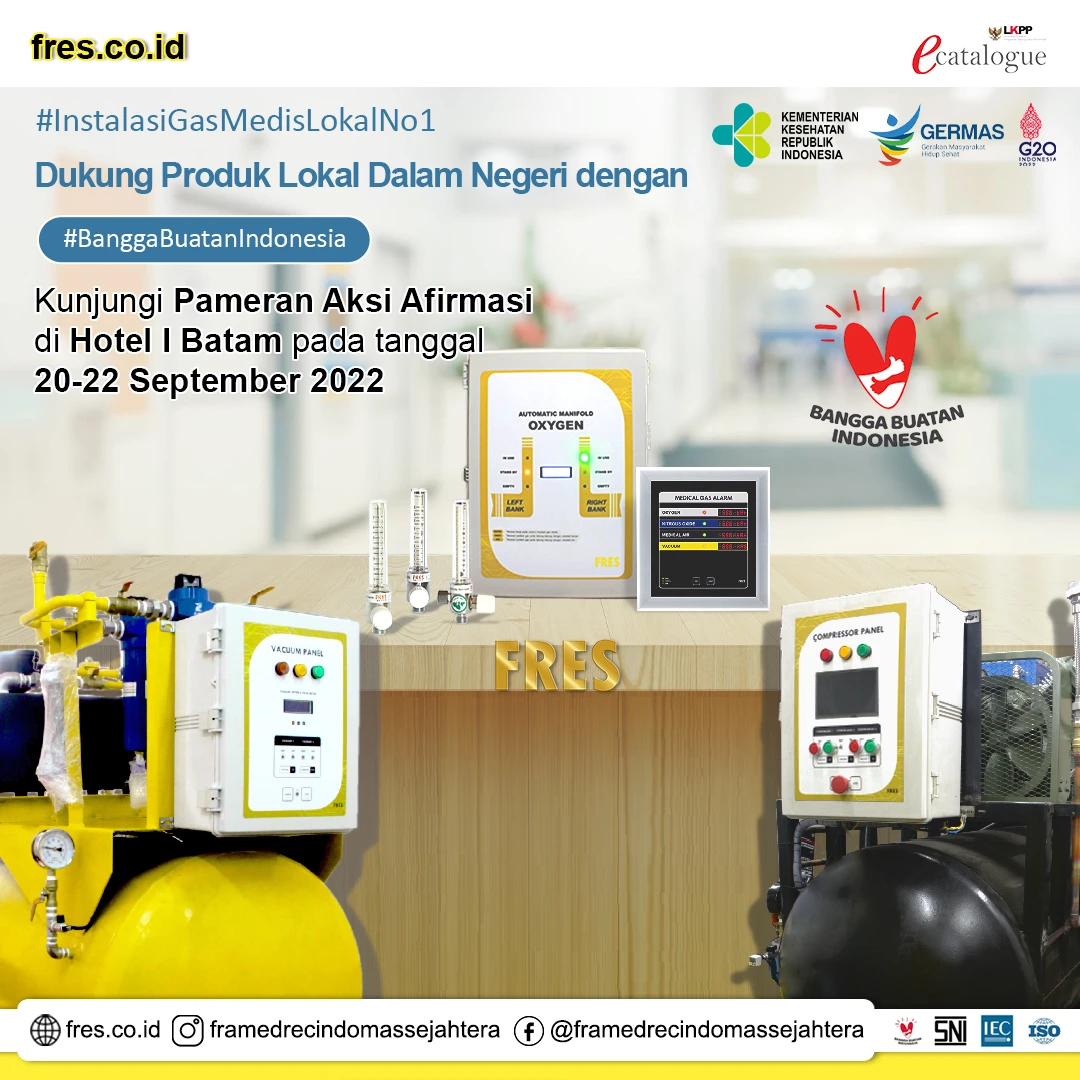
Good News! FRES now offers Medical Gas and Vacuum Systems, along with point-of-use medical gas installation systems, which are now listed on the LKPP Government Electronic Catalog system

Users / PPK / Budget Users are now greatly facilitated when determining Medical Gas requirements for building or renovating a hospital, simply by specifying the total number of Medical Gas Outlet points needed.
The FRES product offers the advantage that outlet points can be used for all types of medical gases (not limited to oxygen alone); hospitals can select the type of medical gas according to their specific needs. These include Oxygen (O₂), Nitrous Oxide (N₂O), Compact Medical Compressor Systems, Compact Medical Vacuum Systems, AGSS (Anesthetic Gas Waste / AGW), Carbon Dioxide (CO₂), and others.
The Medical Gas Package and Outlet-by-Outlet Installation System in the E-Catalog consists of:
- Piping from the Central Room to the Patient Care Rooms
The pipes used are made of copper with a purity of ±99% (ninety-nine percent) (ASTM B 819 / BS EN 13348, Type L).
- Digital Medical Gas Alarm (with Low, Normal, High indicators)
- Zone Valve / Distributor Valve (digital display)
- 1.2-meter-long aluminum bedhead unit.
- Medical Gas Outlets/Inlets (Oxygen (O₂) / Nitrous Oxide (N₂O) / Water / Vacuum / Carbon Dioxide (CO₂) / Nitrogen (N₂).
The Medical Gas Installation System Package per Outlet Point in the FRES E-CATALOG includes a 1-year warranty, product functionality testing, training for hospital facilities and infrastructure staff, as well as a Certificate of Testing for Medical Gas Equipment and Installation Systems issued by the Health Facility Safety Agency / BPFK (terms and conditions apply).