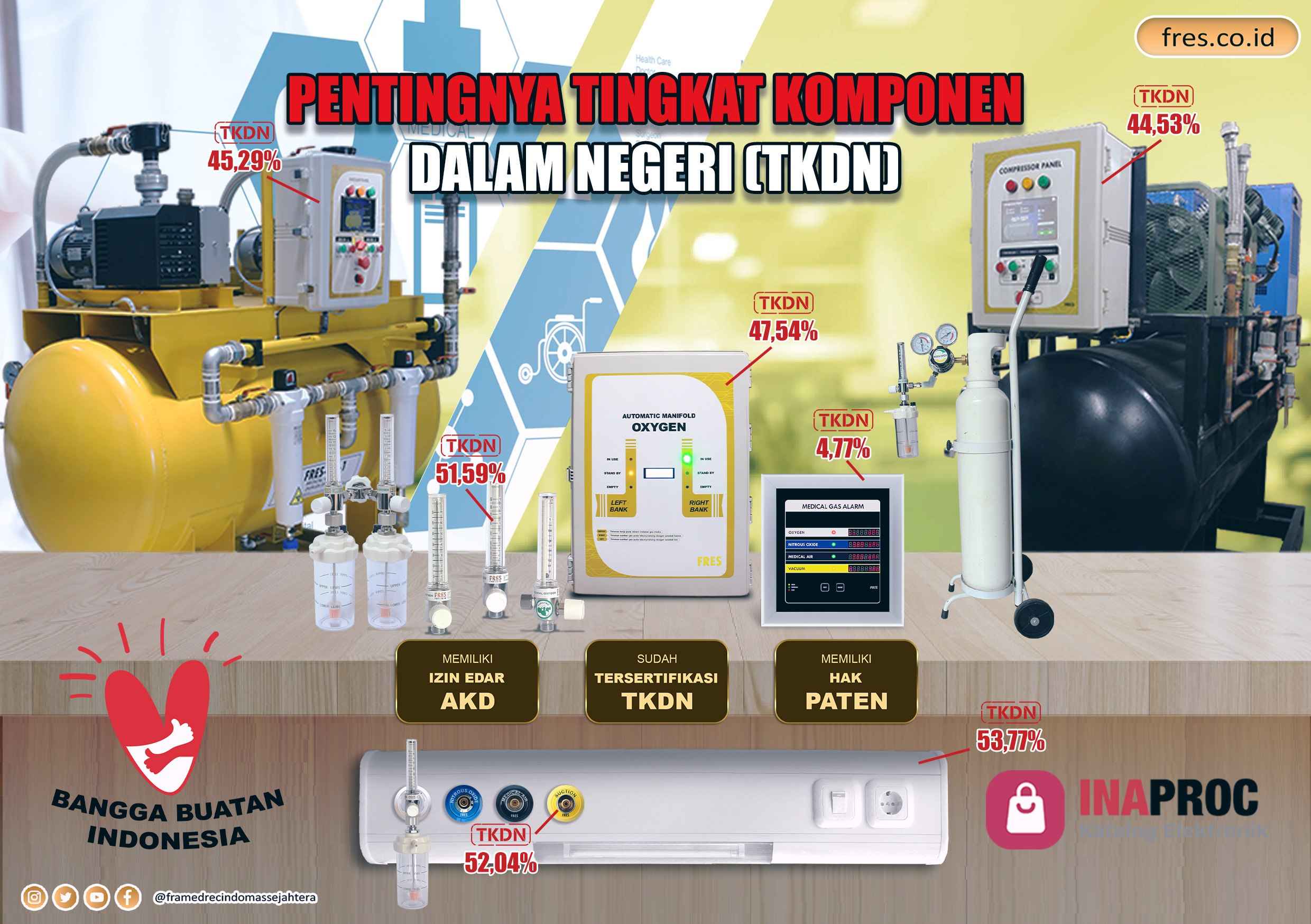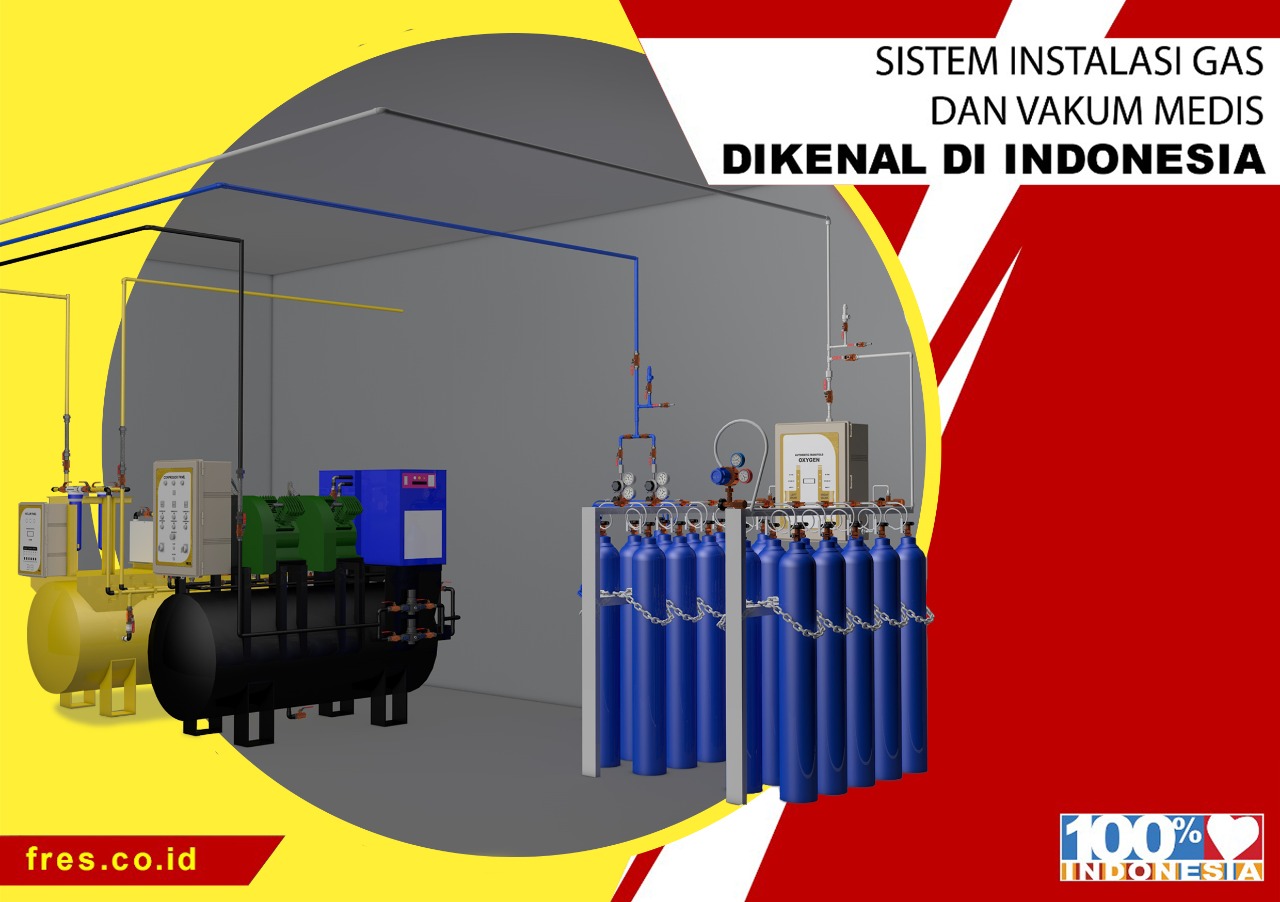
A hospital's medical gas installation is a system that produces medical gases and vacuums and distributes them to rooms requiring them. The first medical gas and vacuum installations were introduced in Indonesia in the 1970s. They were first installed at Husada Hospital in North Jakarta. Before the medical gas and vacuum installation system was introduced in Indonesia and internationally, medical gas services were provided directly from medical gas cylinders. This method has now been phased out in some service rooms in hospitals and other healthcare facilities.
This is due to the numerous risks associated with using medical gas cylinders directly to patients. Medical gas installations have the same output as medical gas cylinders, but offer a high level of efficiency and ensure patient safety. The source of medical gas, in the form of high-pressure cylinders, is stored in a room that is not easily accessible to the public. This area is often known as a medical gas center. This room is specifically designed to store medical gas cylinders and other medical gas and vacuum central equipment. Examining the term "medical gas installation," it refers to equipment integrated into a single system that can distribute or circulate the gases needed in each service room in a healthcare facility or hospital.
It is clear that a hospital medical gas installation is a system consisting of several pieces of equipment to distribute medical gas and vacuum to patients in each medical room within a healthcare facility. This distribution utilizes piping. Medical gas and vacuum installation pipes have specific standards to ensure they can flow gas and vacuum to produce outputs that meet applicable medical standards. The selection of pipes for a hospital medical gas installation requires special attention, as the pipes that carry medical gas and vacuum are vital for their use. Pipes that can support the distribution of medical gas and vacuum are made of copper or stainless steel. However, currently, both in Indonesia and internationally, the most commonly used type of medical gas and vacuum installation pipe is copper pipe.
1. Medical Gas Copper Pipe

Copper pipe itself has several grades and specific standards. Of course, for medical gas and vacuum installations, the copper pipe used must meet medical standards. Many hospitals and other healthcare facilities have not yet implemented proper piping standards. This also arises because medical gas and vacuum system installers provide pipe specifications and standards that do not have internationally recognized certification. In addition to installers, many medical gas and vacuum installation planners still lack understanding of product certification and manufacturing certification for medical gas and vacuum copper pipe standards. Therefore, we can all understand that nearly 70% of medical gas and vacuum installation systems in hospitals and other healthcare facilities in Indonesia do not properly comply with copper pipe standards for medical gas and vacuum installations. Currently, in Indonesia, we only find one brand of copper pipe that holds international certification for its production and manufacturing standards.
In addition to pipes, several other pieces of equipment are required for medical gas and vacuum installations. Zone valves, also known as box valves or area valves, are also known as shut-off valves. In this article, we refer to them as box valves.
2. Medical Gas Shut-Off Valve


A box valve is a unit consisting of a ball valve with three valve bodies, also known as 3-piece valve bodies, and a pressure gauge. Some current products use digital pressure gauges, but many still use analog ones. Equally important, today's valve boxes are equipped with emergency access routes, which are used in the event of a problem with the medical gas and vacuum piping system originating from the Central Room. The equipment mentioned above is packaged in a box made of metal or plastic. The valve box must have an access door that is easy to open and close. The box cover must not be keyed. This is because the valve box must be accessed by specially designated personnel in the event of a building emergency, such as a fire or earthquake. Valve boxes are typically located in areas with 24-hour staffing, such as nurse stations or security guard posts.
Next, equipment that is equally important to support the medical gas and vacuum installation system in hospitals or other healthcare facilities.
3. Medical Gas and Vacuum Alarms

Medical Gas and Vacuum Alarms These devices can provide signals regarding the condition of medical gas and vacuum in the installation system. Medical gas and vacuum may run out of supply or even experience supply failures due to equipment failure in the medical gas and vacuum installation. This equipment, in addition to providing real-time indications of medical gas and vacuum pressure, must also provide audible signals that will function/operate if the medical gas and vacuum pressure conditions are experiencing problems. This device is known as a medical gas and vacuum alarm.
The final piece of equipment most needed in a medical gas and vacuum installation system is the inlet and outlet.
4. Medical Gas Inlet and Outlet

Medical Gas Inlet and Outlet. This equipment (medical gas and vacuum inlet and outlet) is located close to the patient and in rooms requiring medical gas and vacuum services, such as inpatient rooms, emergency rooms, intensive care units (ICU), neonatal intensive care units (NICU), PICU rooms, operating rooms, isolation rooms, procedure rooms, and so on. Medical gas inlets and outlets function as devices for delivering pressurized gas to patients through medical equipment and measuring the flow rate of medical gas, which is also a medical device.
Meanwhile, the inlet is a device that functions to draw air and collect fluids from the human body (patient). Medical gas and vacuum inlets and outlets play a crucial role in medical gas and vacuum installation systems. Therefore, healthcare facilities must fully understand how to use and maintain medical gas and vacuum outlets and inlets.
In addition to the use and maintenance of medical gas installations, we also need to understand the types and standards of this equipment. This will help us determine which equipment is suitable for use in our healthcare facilities or hospitals.
These are some of the equipment needed to build a medical gas and vacuum installation system. All equipment in this installation system requires a source of medical gas and vacuum, commonly known as a central medical gas and vacuum system. Gas centralizers themselves come in several models and uses, depending on the gas needed, such as oxygen, nitrous oxide, nitrogen, carbon dioxide, medical compressed air, and other gases. Additionally, there are sources or centralizers that can produce medical compressed air and compressed air for equipment, as well as sources or centralizers that can produce suction or vacuum air.
Medical Gas Installation Forum
Questions and answers regarding Medical Gas Installation, hopefully it can become a forum and platform for all healthcare professionals in Indonesia.http://instalasigasmedis.org/
1. Please open http://instalasigasmedis.org/
2. Then click SIGN UP
3. Enter your username with your cool name
4. Enter your email address
5. Create a password
Please feel free to discuss any issues related to the world of medical gas installations. Greetings from Medical Gas Installations