HOSPITAL MEDICAL GASES
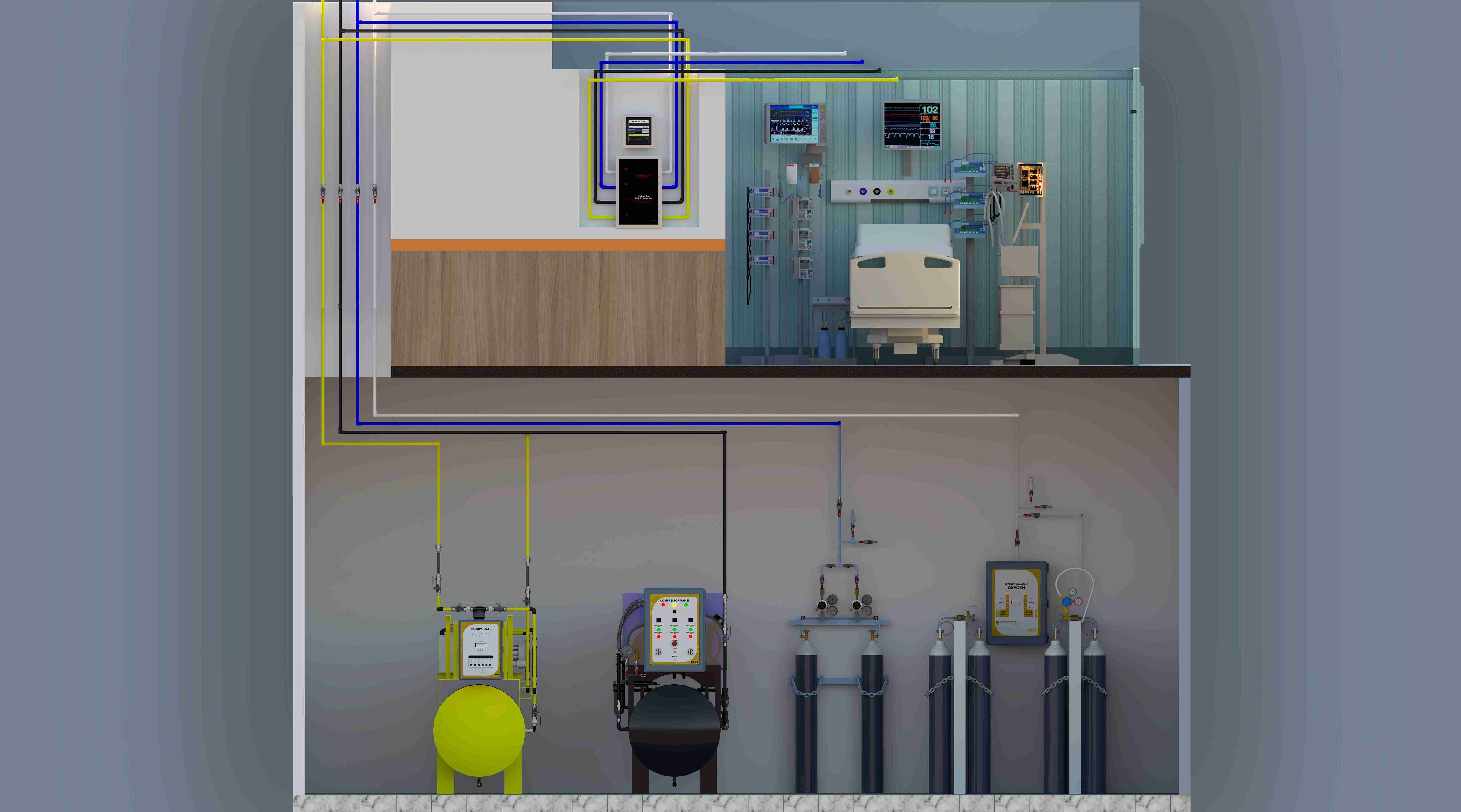
Medical gases play a vital role in hospitals, as evidenced by the numerous needs of hospitals and other healthcare facilities directly connected to medical gas installation systems. The following are the types of medical gases commonly used, and understanding them will hopefully help with their proper use. This improves the quality of a hospital, especially in terms of service and accuracy in patient care, thereby avoiding technical errors.
Types of Medical Gases and Their Functions
Oxygen (O2)
The use of oxygen in the medical world was first introduced in the early 1900s. It is a type of gas that is always available in hospitals and almost all healthcare facilities. It is commonly used in emergencies and as first aid, especially for patients experiencing shock, trauma, severe bleeding, poisoning, and cardiovascular (heart and blood vessel) disease. Oxygen is also often used as a therapy for COPD (Chronic Obstructive Pulmonary Disease). This therapy involves providing supplemental oxygen to patients with COPD over a long period of time. COPD itself is a long-term effect of smoking, so patients may require supplemental oxygen. It can be used only when the condition worsens or as permanent daily support. This therapy has been shown to significantly help patients with COPD survive.
Nitrogen (N)
Nitrogen is a medical gas used for cryotherapy. Cryotherapy is a treatment for patients with tumors located on the outside of the body, such as skin tumors, that utilizes the extreme cold produced by liquid nitrogen. Treatment is performed by applying nitrogen directly using cotton or a syringe. It also functions as a storage medium for tissue, cells, and blood at low temperatures. It is also used as a mixture for conducting lung function tests. Meanwhile, in the pharmaceutical world, it is used in the manufacture of medicines.
Nitrogen Oxide (N2O)
Nitrogen Oxide a is a medical gas known as laughing gas. Dentists began using it as an analgesic (pain reliever) in 1812. Since then, nitrous oxide has been widely used in surgery, both as an analgesic and an anesthetic. Sometimes, this is contraindicated for patients undergoing certain types of medical procedures, so the use of this type of gas is not recommended.
Carbon Dioxide (CO2)
Carbon dioxide is often used for insufflation (the act of blowing gas, powder, or vapor into the body) of medical gases for less invasive surgeries. It is also used for respiratory stimulation before and after anesthesia. This is usually packaged in cylinders, but for large quantities, it's best distributed through a medical gas installation system.
Medical Air
Medical air is produced by compressed air used in hospitals and healthcare facilities that distribute medical gases. It is not contaminated by other particles, has no odor, and is moisture-free. When a patient is in the operating room, whether in an emergency or not, surgeons/doctors use medical air to keep the patient breathing comfortably. Compressed air can be used as medical air or to propel equipment.
ADVICE
Whether using a cylinder directly or a medical gas installation system, regular inspections are required. This is crucial for patient safety, not the difference between your financial success or failure. Don't settle for cheap options that could endanger patient safety. It is advisable to have technicians available for maintenance and repairs to keep your medical gas system in good condition, as this will likely save you money.
Medical Gas Installation Forum
Questions and answers regarding Medical Gas Installation, hopefully it can become a forum and platform for all healthcare professionals in Indonesia.http://instalasigasmedis.org/
1. Please open http://instalasigasmedis.org/
2. Then click SIGN UP
3. Fill in your username with your COOL NAME
4. Enter your email address
5. Create a password
Please feel free to discuss any issues related to the world of medical gas installations. Greetings from Medical Gas Installations