The Domestic Component Level (TKDN) has become a crucial strategic policy for Indonesia. It's a clear government effort to ensure that state funds are spent on products made by the nation's people. The goal is clear: to strengthen local industry, create as many jobs as possible, and reduce our dependence on imported goods.
In particular, this policy has received strong emphasis in state spending, particularly in the procurement of medical equipment. Through President Prabowo's directives and new regulations from the Ministry of Health, you will see how TKDN has become a mandatory requirement. This step is a crucial foundation for building economic independence and national sovereignty in meeting strategic needs independently from within the country.
- Understanding TKDN: Definition and Benefits for the National Economy The Domestic Component Level (TKDN) is the percentage of domestically produced components in a good, service, or a combination of both. This component includes the use of raw materials, design, and local labor. TKDN certification serves as a benchmark for the extent to which a product truly utilizes domestic resources in its production process.
The primary benefit of TKDN for the national economy is significant. By prioritizing products with high TKDN, the government effectively stimulates the growth of local industries. This not only reduces our dependence on imported products but also helps maintain the stability of the rupiah exchange rate. State spending favoring domestic products will directly stimulate the economy from within.
Furthermore, the implementation of TKDN is a strategic step towards building national independence. This policy encourages technology transfer and increases human resource capacity across various industrial sectors. This strengthens the foundation of the national industry and makes it more competitive in the global market, creating a positive multiplier effect for sustainable economic development in the future.
- TKDN in State Expenditure: Encouraging Economic Growth and National Independence. The use of the State Budget (APBN) for products with high TKDN is a vital instrument in driving the economy. When the government spends state funds on domestic goods and services, it directly supports the circulation of money within the country. This cycle encourages the growth of local industries, increases the income of domestic companies, and ultimately contributes significantly to Gross Domestic Product (GDP).
More than just economic growth, the Domestic Component Content (TKDN) policy in state spending is a strategic step towards building national independence. By reducing dependence on imported products, Indonesia becomes more resilient to global economic turmoil and supply chain disruptions. This independence is crucial, especially in strategic sectors such as health, defense, and infrastructure, which affect the livelihoods of many people.
Every rupiah allocated for domestic products has a direct impact on job creation. Local industries that secure government contracts will undoubtedly increase their production capacity, requiring more workers. This not only reduces unemployment but also encourages skills development for local human resources so they can compete and meet industry standards.
- President Prabowo's Directive: Strengthening Domestic Component Content (TKDN) as a Top Priority in State Spending. President Prabowo Subianto has issued a firm directive placing strengthening Domestic Component Content (TKDN) as a top priority in all state spending. This policy is not merely a recommendation, but rather a strategic instruction to ensure that the State Budget truly benefits domestic industries. This should be seen as a manifestation of the government's strong commitment to building economic sovereignty and reducing dependence on imported products.
This directive specifically targets all ministries, institutions, regional governments, and state-owned enterprises (SOEs) to prioritize local products in the procurement of goods and services. The government will no longer tolerate purchasing imported products if domestically produced substitutes are available. This demonstrates a concrete effort to shift spending to local producers throughout Indonesia.
The impact of this firm policy is expected to fundamentally strengthen the national industrial structure. With market guarantees from the government, domestic producers will be more encouraged to innovate and improve the quality of their products. Ultimately, this measure will not only absorb more workers but also has the potential to stabilize the rupiah exchange rate in the long term.
- Transforming Installation Equipment into Medical Devices: The Role of the Ministry of Health and the Domestic Component Level (TKDN) The Ministry of Health (Kemenkes) has taken a strategic step by reclassifying several installation equipment as medical devices. You may know them as hospital furniture, such as patient beds, instrument cabinets, or IV poles. This change is significant because it places these products under the Ministry of Health's strict regulations, ensuring that quality and safety standards are met before use in healthcare facilities.
With their new status as medical devices, these products are now required to meet the Domestic Component Level (TKDN) in all state procurement. This policy intelligently opens the door for local furniture and installation industries to participate in the healthcare procurement market. You can see this as a concrete effort by the government to protect and develop domestic producers, specifically.
This step by the Ministry of Health ensures that the large budget for hospital equipment procurement is no longer diverted to imported products. This policy also encourages local producers to improve the quality of their products to meet applicable medical standards. The ultimate goal is to build a strong, independent healthcare support industry ecosystem capable of meeting all domestic needs from upstream to downstream.
- Mandatory Criteria for State Procurement of Medical Devices: Ministry of Health Permit, Domestic Component Content (TKDN), and Local Production. In every state procurement process for medical devices, there are mandatory criteria that are non-negotiable. The primary and most fundamental requirement is a Distribution Permit from the Ministry of Health. This permit serves as proof that a product has passed quality, safety, and suitability standards, thus serving as the frontline in ensuring patient safety.
Once a product is declared safe through a Distribution Permit, the Domestic Component Content (TKDN) and local production criteria become primary considerations. The government is required to prioritize domestically produced medical devices with the highest TKDN values. For industry players, this is a clear signal that a product's competitiveness is measured not only by price but also by its contribution to the national economy.
The combination of these three criteria creates an ideal procurement system. The Ministry of Health permit ensures public health and safety, while the Domestic Component Content (TKDN) and local production direct state spending to strengthen the domestic industry. This multi-layered mechanism ensures that every government purchase of medical devices not only improves the quality of healthcare services but also actively builds the nation's economic independence.
- Positive Impacts of TKDN Implementation: From Job Creation to Increased Industrial Competitiveness. The implementation of TKDN directly creates more jobs for the community. When the government prioritizes the purchase of domestic products, local factories and industries will increase their production capacity. As you can imagine, this increase will require additional workers, from operators to technical experts. The effect is not only to reduce unemployment but also to foster an economic ecosystem around industrial areas.
The TKDN policy is also a key driver for increasing national industrial competitiveness. The government's market guarantee encourages local producers to invest more in research and technological development. You will see increasingly high-quality and innovative domestic products. Healthy competition among local producers will ultimately produce superior products ready to compete in the global market.
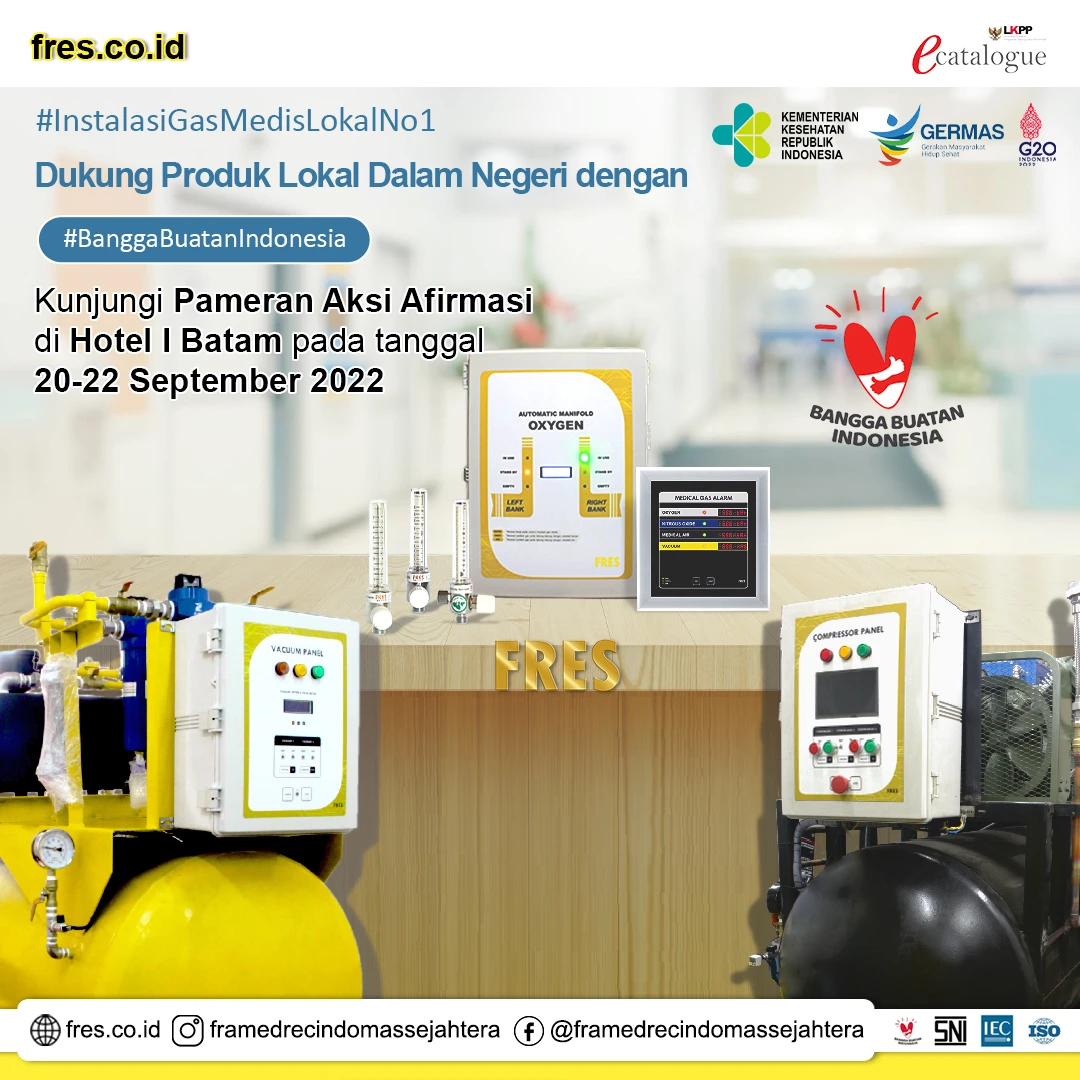
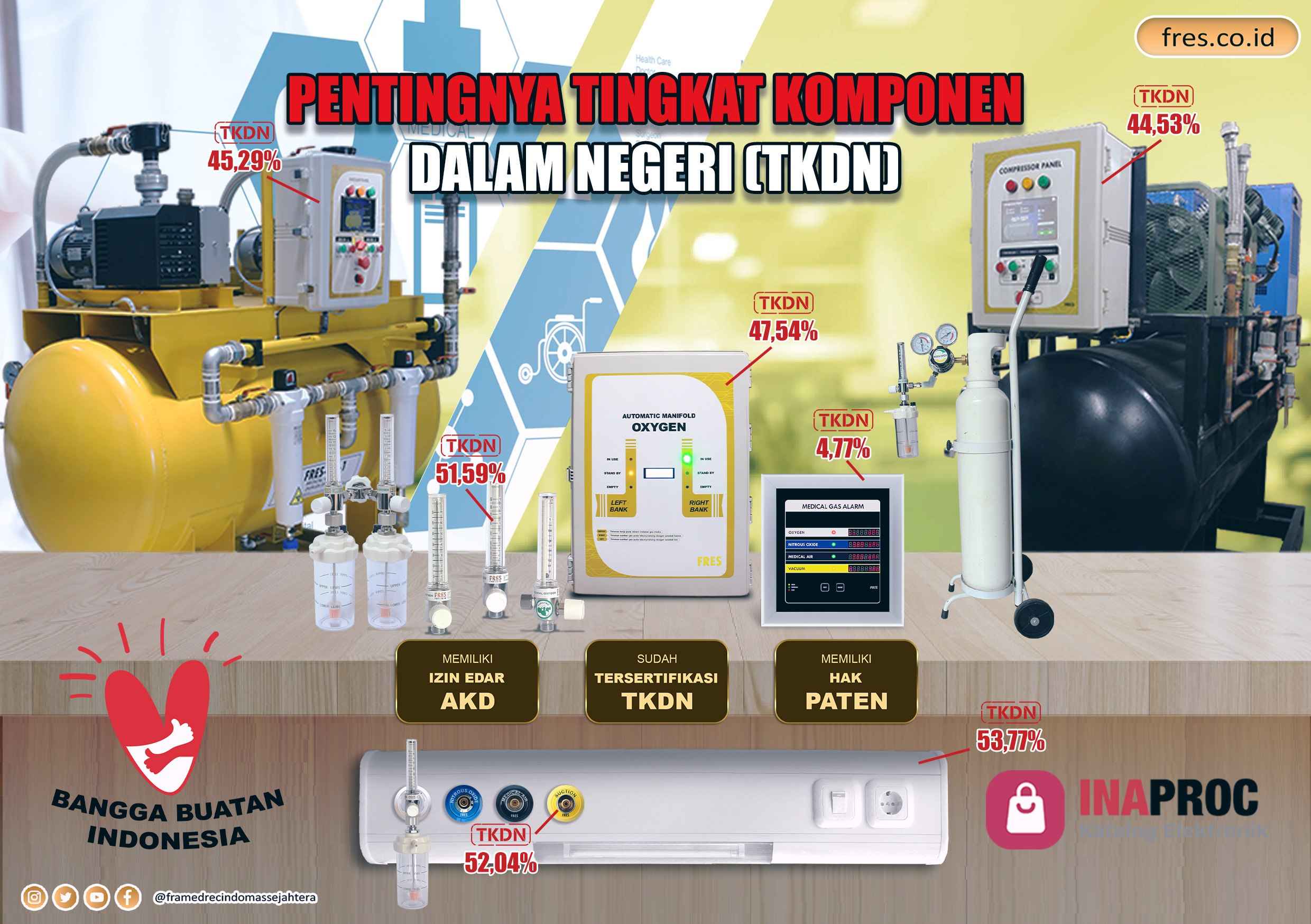
Currently, FRES products are available in the INAPROC Electronic Catalog, a government procurement platform for goods and services for the Indonesian government, including Medical Gas and Vacuum Installations, Medical Gas Alarms, Outlet Terminals, Oxygen Flowmeters, and hospital interiors. With a TKDN above 50%, FRES products are categorized as products with high local content and are highly prioritized.
Another positive impact is the strengthening of the overall national economic structure. By reducing dependence on imported products, especially in strategic sectors like healthcare, our economic resilience becomes more solid. It's important to understand that this helps maintain the stability of the rupiah exchange rate and strengthens the trade balance. Ultimately, industrial independence is an important foundation for sustainable development.
- Challenges and Strategies for Increasing TKDN: Collaboration Between Government, Industry, and the Community. Despite its noble goals, increasing TKDN faces various challenges. It's important to note that dependence on imported raw materials remains high in several industrial sectors. Furthermore, there's a persistent perception that foreign products are of superior quality, as well as a lack of investment in local research and development. Overcoming these obstacles requires hard work and commitment from all parties.
The main strategy to address these challenges is through synergistic collaboration. The government needs to provide fiscal incentives and simplify the TKDN certification process. Furthermore, the industry must proactively invest in innovation and quality improvement. Close collaboration between the government as regulator and industry as implementer is key to the success of this program.
The role of the community is equally important in this ecosystem. By choosing and proudly using domestic products, you directly create strong market demand. The movement to love local products must continue to be encouraged to change consumer mindsets. Public support will fuel the industry's continued growth and product competitiveness.
- Conclusion: Local Content as a Key Pillar of Sustainable Development and Indonesia's Economic Sovereignty. The Local Content policy, reinforced by President Prabowo's firm direction and the Ministry of Health's strategic initiatives, is no longer just talk. You have seen how it has become a key instrument for directing state spending, particularly in the health sector, to favor local industries. This is the foundation for a paradigm shift in the economy to build national independence from within.
The impact of this policy is very real and multi-layered, from the creation of new jobs to the increased competitiveness of domestic products. By prioritizing Local Content, you are participating in reducing dependence on imports and strengthening the national industrial structure. Every rupiah spent effectively becomes an investment for long-term economic growth and national stability.
While challenges remain, synergistic collaboration between the government, industry players, and support from you as a community is key. The implementation of TKDN is not a one-person task, but a collective effort. Ultimately, TKDN stands as a key pillar that will support sustainable development and realize Indonesia's economic sovereignty in the future.
Come on... Discover a wide variety of domestically produced medical devices, medical gas installations, accessories, and hospital interiors to complement your hospital needs. INAPROC Electronic Catalog or Indonesian government procurement of goods and services.
Please contact us through the following services:
Tel.: +623412110218 Mobile/WhatsApp: +6282122300700 E-mail: Info@fres.co.id Web: fres.co.id
Do you have questions? We are ready to help. We will respond quickly to meet your needs. Contact us anytime, anywhere, or join the Q&A Forum regarding Medical Gas Installations. We hope this will become a forum and platform for all healthcare professionals in Indonesia. https://t.me/instalasigasmedis
#instalasigasmedis #centralgasmedical #oxygenflowmeter #medicalgasflowmeter #medicalgas #healthdevices #healthdeviceaccessories #ProductEcatalog #generalhospital #privatehospital #lovelocalproducts #inaprocelectroniccatalog